

Getting people to your site is one thing. Getting them to actually buy is the real challenge.
On average, over 70% of shopping carts are abandoned before checkout (if it’s less for you, consider yourself ahead of the curve). In some industries, that number climbs to nearly 80%. Traffic isn’t the problem — conversion is.
Today’s shoppers have high standards and zero patience for friction. Complicated checkouts, surprise fees, or clunky site design is all it takes for them to bounce to a competitor.
This is where the experience matters. Not just what you sell, but how you present it, guide users, and remove friction along the way.
Below are 10 features that directly impact conversion in 2026, and why they matter.
- 1. 3D Product Visualization
- 2. Augmented Reality (AR) Product Experience
- 3. Interactive 3D Product Configurators
- 4. AI-Driven Personalization
- 5. Frictionless Checkout Experience
- 6. Real-Time Inventory Visibility
- 7. Omnichannel Experience
- 8. Headless Commerce Architecture
- 9. Advanced Analytics & Behavioral Tracking
- 10. Seamless Backend Integration (ERP, CRM, WMS, PIM)
- Final Thoughts
1. 3D Product Visualization
A few flat photos usually aren’t enough to give customers enough confidence to buy, especially for products where details matter, like furniture, home goods, electronics, or luxury items. Shoppers want to see texture, scale, and every angle before they feel comfortable spending their money.
3D visualization transforms a passive product page into an interactive experience. Instead of scrolling through images, customers can rotate the product, zoom in on stitching, or explore details that would normally require an in‑store visit.
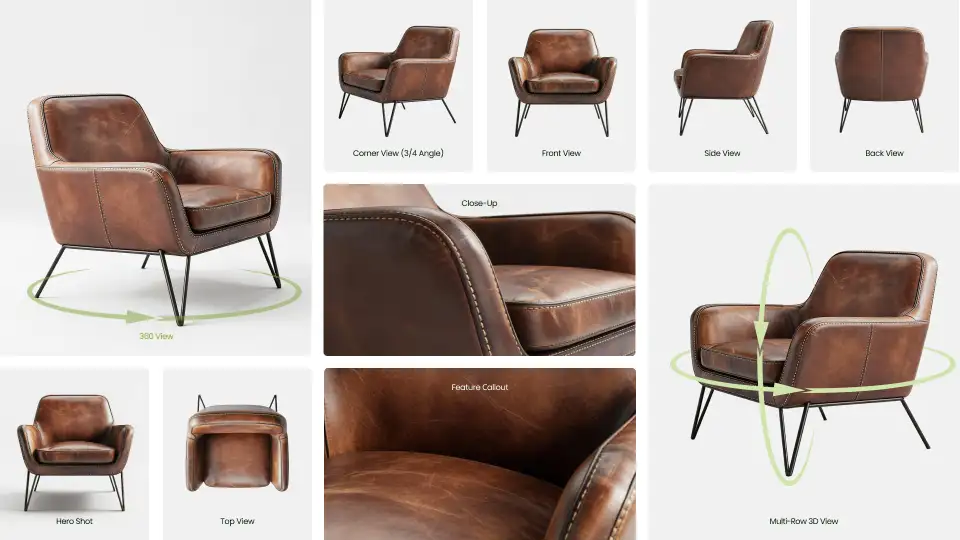
It directly changes how people behave on your site. Instead of a quick scan and a bounce, they stop and explore. That extra time spent interacting with the product builds the confidence they need to finally hit “Add to cart”.
The impact:
- Removes uncertainty: The #1 reason for cart abandonment is doubt. 3D reduces it dramatically.
- Reduces returns: 64% of shoppers say they’d be less likely to return a product if they could examine it virtually first.
- Cuts photography costs & speeds up content creation: For large catalogs or many variations, 3D rendering can be up to 3× faster and 5x cheaper than traditional photoshoots.
2. Augmented Reality (AR) Product Experience
The biggest barrier in online shopping has always been the inability to “try before you buy.”
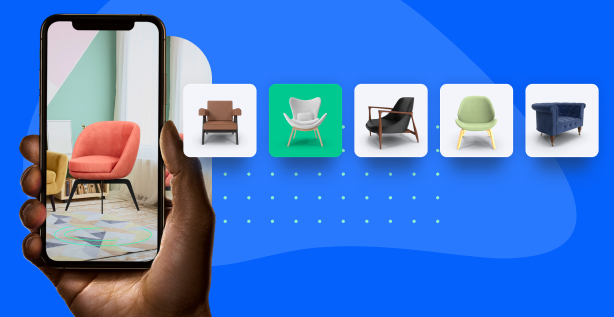
AR eliminates that by letting customers place true-to-scale digital products directly into their environment. It lets shoppers use their phone camera to drop a digital version of a product right into their own room. Instead of trying to imagine if a new rug will clash with the floor or if a pair of glasses fits their face, they just… see it.

Before the pandemic it was more like a nice feature, but today it’s a must-have for many industries. Even Apple uses AR’s “View in your space” feature to help customers understand how a MacBook fits on their actual desk.
The impact:
- Higher conversion rates: AR users are 90% more likely to complete a purchase.
- Fewer abandoned carts: Less hesitation means fewer drop-offs at the final step.
- Shorter sales cycle: Customers decide faster, reducing delays and lost intent.
3. Interactive 3D Product Configurators
If your products have thousands of possible combinations but your website only shows a few, you’re losing sales.
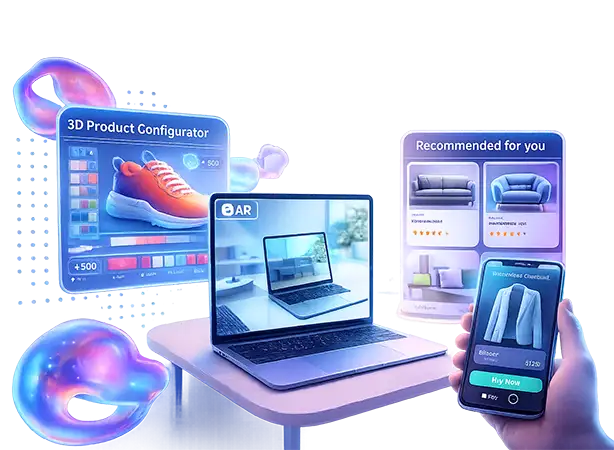
A 3D configurator lets shoppers build their perfect version in real time, choosing colors, materials, finishes, and add-ons while seeing the result instantly.
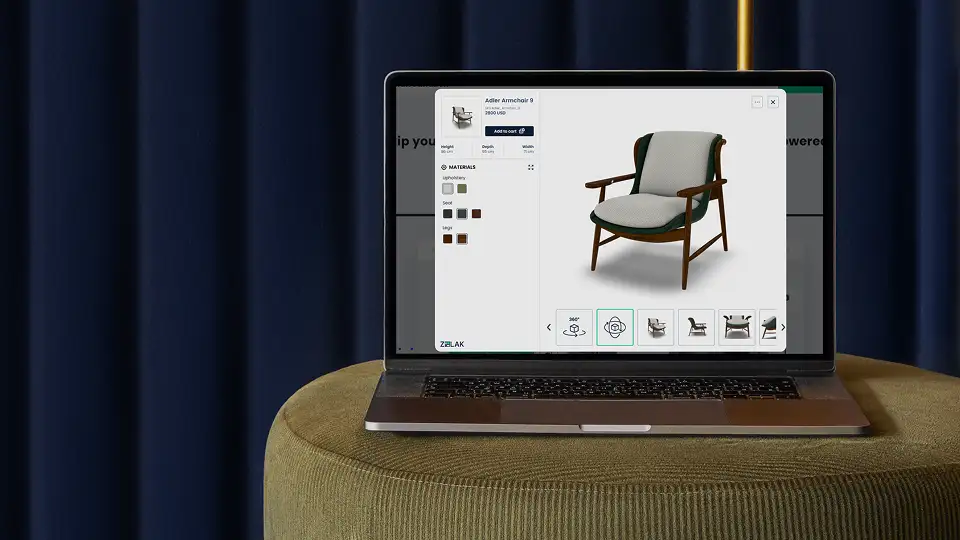
What customers can do:
- Customize colors, materials, and finishes instantly
- Rotate in 360° and zoom in on details
- See live pricing as options change
- View the final product in AR
The impact:
- Higher conversion rates: Customers are more likely to buy when they can create what they want.
- Higher Average Order Value (AOV): When shoppers can visually see the impact of a premium material or a custom add-on, those upgrades feel tangible. It’s the most natural way to upsell.
- More engagement: Instead of a quick scroll, users spend up to 3x more time on the page interacting with the product.
4. AI-Driven Personalization
Large catalogs can overwhelm shoppers. AI personalization guides them toward the right products faster, making the experience feel curated rather than chaotic.

How it works:
- Smart search: Helps users quickly find the right product instead of scrolling through 50 pages.
- Relevant recommendations: Shows products based on their behavior, not just generic “top sellers”
- Visual guidance (Virtual Showroom): Customers can upload a photo of their room, and the AI clears out existing furniture so they can preview new items in context, even mixing and matching products to “shop the look.”
The impact:
- Higher click-through rates (CTR): More relevant products lead to more clicks.
- Faster quoting: Automated data collection speeds up complex product pricing.
- Better retention: Customers are more likely to come back when the experience feels tailored to them.
5. Frictionless Checkout Experience
Every extra step in your checkout process costs you sales. Even small issues like too many fields, unclear pricing, or slow pages can be enough for shoppers to abandon their purchase at the last moment.
A great checkout is fast, simple, and transparent.
What a good checkout looks like:
- Fast and responsive: No lag or loading delays that give users time to second-guess.
- Mobile-first: Just as easy to complete on a phone as on a desktop.
- Transparent pricing: No surprise fees added at the final step.
- Flexible options: Multiple payment methods to remove hesitation.
Common conversion killers to avoid:
- Forced account creation: Let users check out as guests.
- Unexpected fees: Hiding the real price breaks trust.
- Complicated forms: Only ask for what’s absolutely necessary.
The impact:
- Lower cart abandonment: Fewer users drop off at the final step.
- Faster decisions: A smooth checkout reduces hesitation and speeds up purchases.
6. Real-Time Inventory Visibility
Nothing breaks trust faster than placing an order, getting a confirmation, and then receiving an “out of stock” email a few hours later.
When your website isn’t synced with your warehouse, mistakes like this lead to cancellations, delays, and frustrated customers.
Real-time inventory ensures your website always reflects actual availability.
What “real-time” means:
- Live sync: Your store, warehouse, and order system are always up to date.
- Accurate delivery dates: You can give clear shipping estimates instead of vague ranges.
- Stock visibility: Showing limited stock helps customers make faster, more confident decisions.
The impact:
- Stronger trust: Customers feel confident buying when stock is accurate.
- Fewer cancellations: Less manual work and fewer “sorry, out of stock” situations.
- Higher conversion rates: Clear availability removes last-minute hesitation.
7. Omnichannel Experience
Modern shoppers don’t follow a straight path. They might discover a product on Instagram, compare it on their laptop, and complete the purchase later on their phone.
If those experiences don’t match: different prices, outdated stock, or separate logins, it creates friction and slows down the purchase.
An omnichannel approach makes your brand feel like one connected store, no matter where the customer interacts with it.
What a unified experience looks like:
- Consistent data: Same prices, product details, and availability everywhere.
- Seamless transitions: Add to cart on mobile, finish on desktop without starting over.
- Unified support: Your team sees the full customer history across all channels.
The impact:
- Higher lifetime value (LTV): Easier, consistent experiences lead to repeat purchases.
- Smoother buying journey: Less friction from discovery to checkout.
- Better retention: A unified experience builds long-term trust.
8. Headless Commerce Architecture
You want to launch a custom landing page for a big Black Friday campaign, but your tech team says it will take months because the platform doesn’t support it.
That’s the problem with traditional eCommerce setups. Your design and backend are tightly connected, so even small changes can become slow and complicated.
Headless commerce separates the two. Your backend (checkout, inventory, etc.) runs in the background, while your team has full freedom to build and update the front end however they want.
The impact:
- Faster launches: Build and release campaigns in days instead of months.
- Better performance: Faster load times lead to lower bounce rates and more sales.
- More flexibility: Easily add new features (e.g. visual modules) without rebuilding your system.
9. Advanced Analytics & Behavioral Tracking
Most stores know their basics: traffic, revenue, conversions. But those numbers don’t explain visitors left without buying.
Advanced analytics shows what happens between the click and the checkout. It shows you exactly where people get stuck, where they lose interest, and which products they spent the most time looking at.
What you can see:
- Drop-off points: Identify where users leave — product page, shipping, or checkout.
- Product interactions: See what people explore, even if they don’t buy.
- Customer journeys: Understand the full path from ad to purchase.
The impact:
- Fewer blind spots: Fix real issues instead of guessing what’s wrong.
- Higher Return on Investment (ROI): Improve conversion step by step, instead of chasing big changes.
- Better marketing: Use real behavior data to retarget and upsell more effectively.
- Smarter ad spend: Catch issues early and avoid wasting budget on broken flows.
10. Seamless Backend Integration (ERP, CRM, WMS, PIM)
Conversion doesn’t end at checkout.
If your systems aren’t connected, operational errors can turn a successful sale into a costly refund.
Seamless integration connects your store with your ERP, CRM, and warehouse systems so everything works together. When a customer places an order, stock updates instantly, the warehouse gets the right data, and the customer receives tracking without manual input.
Your business runs as one system, not disconnected parts.
The impact:
- Fewer errors: No manual data entry means fewer wrong orders and fewer costly mistakes.
- Lower operational costs: Less time spent fixing issues, processing refunds, and handling support.
- Easier scaling: Handle more orders without increasing headcount.
- Better customer experience: Faster updates and fewer “Where is my order?” requests.
Final Thoughts
Individually, each of these 10 features can improve performance. But the real impact when they work together as one seamless, end-to-end experience.
- 3D visualization builds confidence
- AR removes doubt
- Configurators increase engagement and AOV
- AI personalization guides decisions
- A frictionless checkout captures intent
- And strong backend integration ensures everything actually delivers
But here’s the reality: most eCommerce setups rely on disconnected tools — a plugin here, an app there, a separate integration for something else. Over time, this creates a “Frankenstein” store: a fragmented system that is slow, hard to manage, and frustrating for the customer.
That’s where Custom eCommerce platform development becomes a strategic advantage.
Instead of forcing your business to adapt to off-the-shelf platforms, a tailored system lets you build exactly what your customers need — fully integrated, scalable, and optimized for conversion from day one.
A custom approach allows you to:
- Create experiences designed specifically for your products and customers
- Connect all systems into a single, unified ecosystem
- Scale without hitting technical or architectural limits
- Improve conversion across every stage of the customer journey
At the end of the day, conversion is not driven by isolated features. It comes from a system where every part of the experience works together, from the first interaction to the final delivery.
Scale your team with premium-class remote developers with 5+ years of experience and the expertise you require.
Let's Talk