


Online shopping is the primary way customers discover and buy products in 2026. As a result, an online store has become a critical revenue channel for businesses of all sizes.
For businesses, this creates both an opportunity and a challenge: launching an online store is easier than ever, but choosing the right platform can directly impact your growth, scalability, and operational efficiency.
Modern eCommerce website builders allow you to:
- launch faster without heavy development
- manage products, payments, and logistics in one place
- automate marketing and customer interactions
However, there is no single “best” platform. The right solution depends on your business model, technical capabilities, and long-term goals.
To help you make the right choice, we analyzed dozens of eCommerce solutions — from beginner-friendly builders to advanced enterprise systems. This guide focuses on platforms that offer the best balance of usability, flexibility, and long-term growth potential.
And if your business requires a custom approach — deeper integrations, unique workflows, or high-load architecture — you may want to consider a tailored solution. In that case, explore our eCommerce software development services to build a platform aligned with your business goals.
What Is an eCommerce Website Builder?
An eCommerce website builder is a platform that allows you to create, manage, and scale an online store without building everything from scratch. While most tools promise similar core functionality, the real difference lies in how well they support your business as it grows.
A reliable eCommerce platform should cover several critical areas:
1. Infrastructure and Security
The platform should provide stable hosting, fast load times, and built-in security (SSL, data protection, uptime reliability). Performance directly impacts both user experience and conversion rates.
2. Payments and Transactions
Seamless integration with multiple payment providers, support for different currencies, and transparent transaction fees are essential for scaling globally.
3. Product and Catalog Management
From simple product listings to complex catalogs with variations, bundles, and inventory tracking — the platform should match the complexity of your offering.
4. Marketing and SEO Capabilities
Built-in tools for SEO, email marketing, discounts, and integrations with advertising platforms help drive traffic and increase conversions.
5. Automation and Operations
Order processing, shipping, tax calculations, and customer communication should be automated as much as possible to reduce manual workload.
6. Analytics and Decision-Making
Real‑time data and reporting help you make smarter decisions and optimize performance.
Top eCommerce Website Builders in 2026
1. Shopify: Best Overall eCommerce Platform

Shopify remains the most dependable all‑around choice for small and midsize brands. It’s built for speed, simplicity, and scale, a combination that’s hard to beat.
Why choose Shopify:
- Easy setup with guided onboarding
- Unlimited product inventory
- Strong built‑in sales tools and multi‑channel support (Amazon, Instagram, etc.)
- Broad payment method support
- Massive app marketplace
Best for: Startups, growing brands, and scalable online stores.
Pricing: Basic ($29/mo), Grow ($79/mo), Advanced ($299/mo), Plus ($2,300/mo). Each tier adds more automation, reporting, and operational features.
Downside: Costs can add up once you factor in apps and transaction fees.
Verdict: If you want a safe, scalable, and highly supported platform, Shopify is the gold standard.
2. Wix eCommerce: Best for Beginners & Design Flexibility
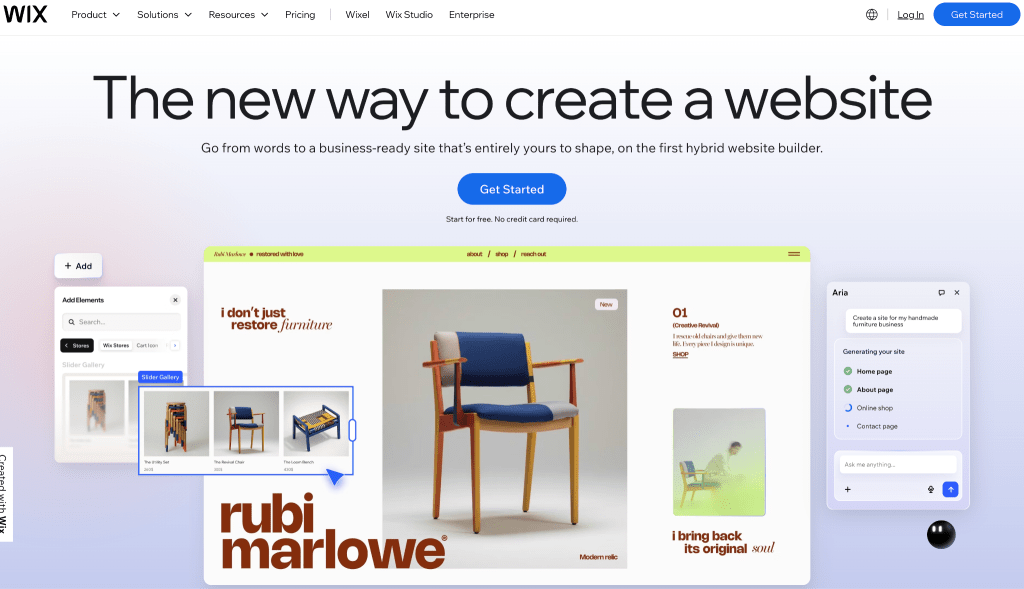
Wix is ideal for anyone who wants to launch quickly and design freely without touching code.
Why choose Wix:
- Extremely easy to use
- Highly flexible drag‑and‑drop design
- Built‑in hosting, security, and marketing tools
- Large app marketplace
Best for: Small businesses, creatives, and content-driven stores.
Pricing: Core ($29/mo) to Business Elite ($159/mo). The $17/mo Light plan does not support eCommerce.
Downside: Large catalogs can slow down the interface and site performance.
Verdict: Perfect if you want to launch quickly and need your store to look exactly like your vision without hiring a developer.
3. WooCommerce: Best for WordPress Users
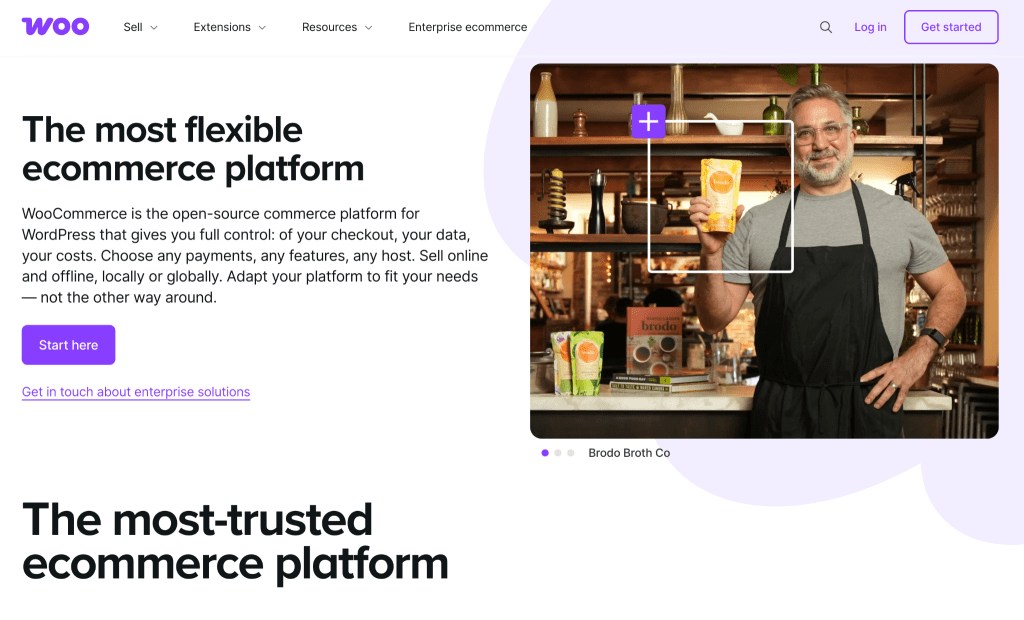
If your site already runs on WordPress, WooCommerce is the natural way to add eCommerce functionality.
Why choose WooCommerce:
- Full ownership of your data and infrastructure
- Thousands of themes and plugins
- Strong SEO foundation
- No platform fees
Best for: Developers, SEO-focused brands, and stores that need a completely custom setup.
Pricing: The core plugin is free, but you’ll need hosting, security, and paid extensions depending on your setup.
Downside: It requires more technical involvement. You’re responsible for maintenance, updates, security, and performance optimization.
Verdict: A great fit if you want full control and have the technical resources to manage it.
4. BigCommerce: Best for Scaling Businesses
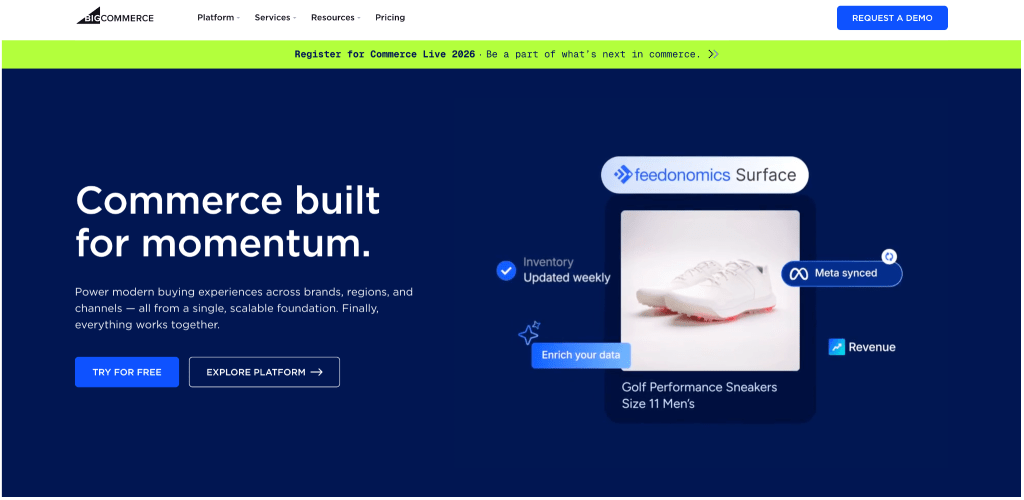
BigCommerce is built for brands that need power, performance, and advanced features without relying on dozens of third‑party apps.
Why choose BigCommerce:
- Many advanced features built in (faceted search, multi‑currency, B2B tools)
- Strong B2B and wholesale capabilities
- Multi‑storefront support
- No transaction fees
Best for: Mid‑sized to enterprise brands, B2B companies, and stores with large catalogs.
Pricing:
- Standard: $29/mo (up to $50k revenue)
- Plus: $79/mo (up to $180k revenue)
- Pro: $299/mo (up to $400k+)
Downside: Steeper learning curve; pricing increases as revenue grows.
Verdict: A powerful all‑in‑one solution for brands ready to scale without plugin overload.
5. Adobe Commerce (Magento): Best for Enterprise eCommerce
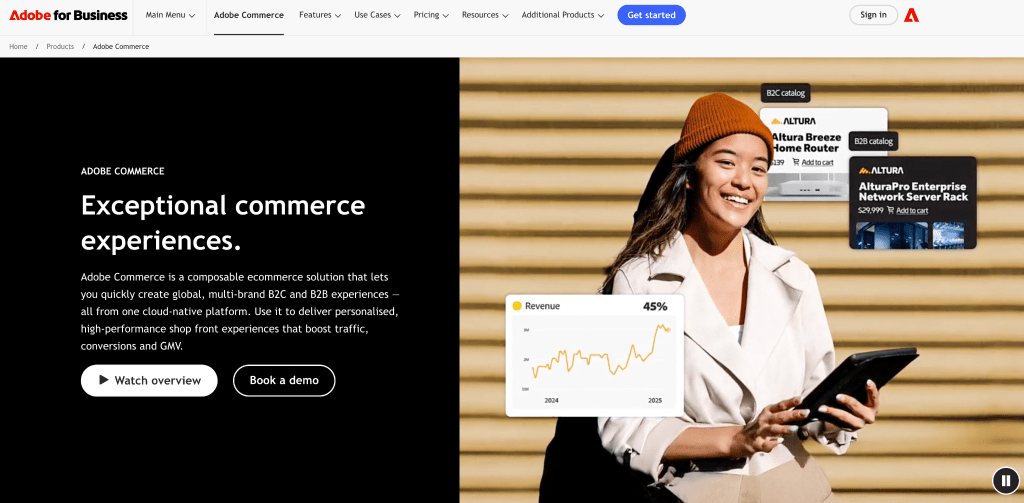
Adobe Commerce is the heavyweight of the group, built for massive catalogs, global operations, and complex B2B workflows.
Why choose Adobe Commerce:
- Handles 500,000+ SKUs
- AI‑powered search and recommendations
- Strong native B2B features
- Deep customization with full code access
Best for: Enterprise businesses, large wholesalers, and global brands that require complex, multi-region, multi-brand setups.
Pricing: Based on your annual Gross Merchandise Value (GMV) and Average Order Value (AOV). As your business grows, the licensing cost increases accordingly.
Downside: Expensive and technically demanding. Usually requires a dedicated development team.
Verdict: The right choice for enterprises that treat their eCommerce platform as core infrastructure, not a simple SaaS tool.
6. Squarespace Commerce: Best for Visual Brands
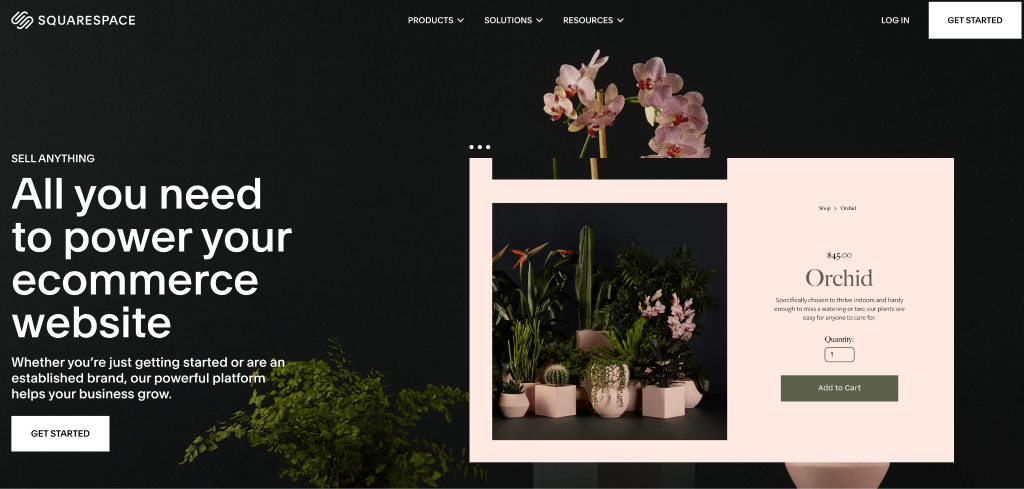
Squarespace is known for its clean, editorial‑style templates. Perfect for brands where aesthetics matter.
Why choose Squarespace:
- High‑quality design templates
- Built‑in creative tools
- Fully managed hosting and security
- Strong content + commerce integration
Best for: Photographers, creatives, boutique brands, and content‑driven businesses.
Pricing:
- Basic: $16/month (Limited commerce features)
- Core: $23/month (Entry point for selling online)
- Plus: $39/month (Includes abandoned cart recovery and advanced shipping)
- Advanced: $99/month (For high-volume stores with lower transaction fees)
Downside: It’s not designed for large-scale or highly complex stores.
Verdict: A great option for design-focused brands that want a visually strong, easy-to-manage website without dealing with technical complexity.
7. PrestaShop: Best Open-Source Alternative for SMBs
PrestaShop is a powerful open-source platform that sits between simple website builders and complex enterprise systems. It’s especially popular among European businesses for its strong support of international currencies, taxes, and multilingual stores.
Why choose PrestaShop:
- Free core platform
- High customization
- Large ecosystem of modules and themes
- Strong internationalization tools
Best for: Small to mid‑sized businesses that want flexibility without enterprise‑level complexity.
Pricing: The platform is free, but you’ll need hosting, SSL, and paid add‑ons depending on your needs.
Downside: It requires more technical setup and ongoing maintenance. You’ll likely need a developer for installation, customization, and updates.
Verdict: A solid choice for SMBs that want control and customization without going full enterprise.
Quick Comparison
How to Choose the Right Platform
Choosing an eCommerce platform is not just a technical decision—it directly impacts how quickly you can launch, how efficiently you operate, and how well your business scales over time.
Instead of focusing on the platform with the most features, look at how well it aligns with your current stage and future goals.
Here’s a practical way to approach the decision:
If You’re Just Starting Out
If your goal is to launch quickly with minimal technical effort, focus on simplicity and built-in functionality.
- Best choice: Shopify or Wix.
- Why: Fast setup, easy-to-use interfaces, and all-in-one functionality.
- Avoid: Complex or developer-heavy platforms.
- Best for: Small businesses, MVPs, and first-time founders.
If You Want to Scale Fast
As your business grows, performance, integrations, and automation become more important.
- Best choice: Shopify or BigCommerce.
- Why: Strong ecosystems, reliable scalability, and support for multi-channel selling.
- Focus: Automation, integrations, and operational efficiency.
- Best for: Growing brands expanding into new markets.
If You Need Full Control and Flexibility
Some businesses require custom workflows, unique logic, or deep integrations that standard platforms can’t support.
- Best choice: WooCommerce, PrestaShop, or Adobe Commerce.
- Why: Open-source flexibility and advanced customization options.
- Trade-off: Higher technical complexity and ongoing maintenance.
- Best for: Teams with development resources or highly specific requirements.
If Design and Branding Matter Most
For brands in fashion, lifestyle, or creative industries, visual presentation can be a key differentiator.
- Best choice: Squarespace.
- Why: Strong design tools and polished, high-end templates.
- Consideration: Limited scalability for large or complex catalogs.
- Best for: Design-focused and content-driven brands.
If You’re Building for Enterprise or Complex Operations
Large-scale businesses require high performance, advanced architecture, and strong B2B capabilities.
- Best choice: Adobe Commerce or BigCommerce.
- Why: Built for large catalogs, complex pricing models, and global operations.
- Focus: Scalability, system architecture, and deep integrations.
- Best for: Enterprise companies and high-volume businesses.
The Verdict
There is no “one-size-fits-all” in eCommerce. The right choice is the one that supports where your business is today while leaving enough room for where it’s going tomorrow.
If your requirements go beyond what standard platforms can offer, such as a unique visual workflow, deep ERP integration, or a high-load architecture, it may be worth considering a tailored approach. In that case, explore our IT solutions to build a solution designed specifically for your business.
Scale your team with premium-class remote developers with 5+ years of experience and the expertise you require.
Let's Talk